Watchdogs on a Leash: The Structural Failures Undermining Federal Oversight
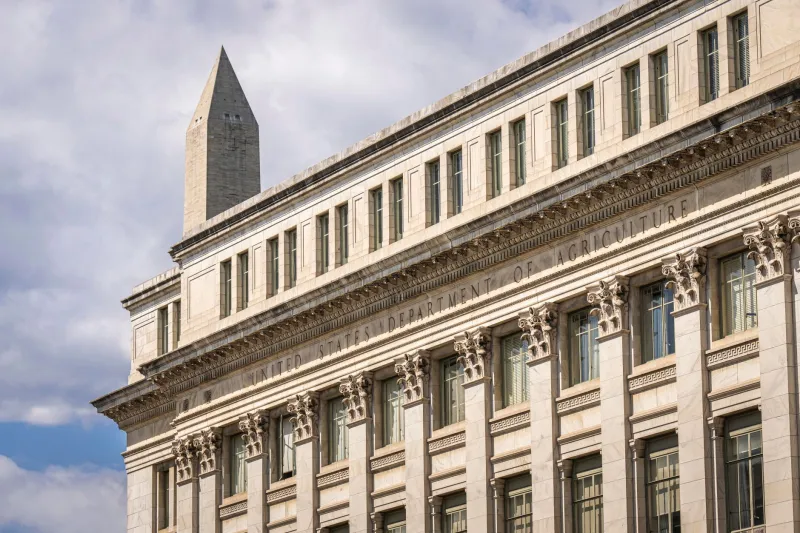
Every year, the federal government publishes a reassuring stack of audit reports, inspector general findings, and accountability assessments. The sheer volume of paperwork suggests a watchdog apparatus working at full throttle. Look past the paper, however, and a more troubling picture emerges — one of oversight offices that are structurally incapable of holding the very institutions they inhabit to genuine account.
The inspector general system, established by Congress through the Inspector General Act of 1978, was designed with a straightforward mandate: provide independent oversight of federal agencies, root out fraud, and report findings without fear or favor. Nearly five decades later, that mandate survives mostly as a legal formality. The mechanisms that were supposed to insulate watchdog offices from political pressure have been quietly hollowed out, one appointment, one budget decision, and one stalled investigation at a time.
Appointed by the Accused
The foundational flaw in the inspector general model is one that critics have flagged for decades without resolution: most IGs are nominated by the president and confirmed by the Senate, meaning the political leadership of the executive branch plays a direct role in selecting the officials tasked with scrutinizing that same branch.
In practice, this creates a confirmation dynamic that filters for candidates unlikely to cause serious discomfort. Nominees who have demonstrated a willingness to pursue aggressive, politically inconvenient investigations rarely make it through the vetting process. Those who do tend to carry relationships — professional, ideological, or institutional — with the very departments they are assigned to oversee.
"You end up with a system where the watchdog's first loyalty is often to the process that put them there, not to the public interest," said one former senior official who served in an oversight capacity at a major federal agency and requested anonymity to speak candidly. "That's not an accident. That's a design feature."
The Trump administration's 2020 removal of several inspectors general in rapid succession — including the intelligence community's IG, who had flagged the whistleblower complaint that triggered the first impeachment — offered the starkest recent illustration of how exposed these positions remain to executive retaliation. But the vulnerability predates any single administration. Career IGs across both Democratic and Republican tenures have described informal pressure, budget constraints, and selective access to documents as routine instruments of suppression.
The Revolving Door Problem
Beyond appointment politics, there is a subtler dynamic corroding the independence of oversight offices: the well-worn career path that leads directly from an IG position into a lucrative private sector role, often at firms with substantial federal contracting interests.
Former inspectors general and senior audit staff are in high demand among consulting firms, law practices, and government contractors precisely because of the institutional knowledge and agency relationships they carry. The result is a professional culture in which current IG staff are acutely aware that their future employment prospects may depend on how aggressively — or how gently — they pursue investigations involving potential future employers.
This is not a hypothetical concern. A review of public disclosures and lobbying registrations conducted by accountability researchers has found repeated instances of former IG officials moving into advisory roles at firms that were subjects of, or adjacent to, investigations conducted during their tenure. Federal ethics rules impose cooling-off periods on certain activities, but those restrictions are narrowly drawn and leave substantial room for former officials to leverage their expertise and contacts.
The incentive structure, in other words, quietly rewards auditors who learn to pull their punches — not through explicit corruption, but through the gradual internalization of professional norms that prioritize collegial relationships over confrontational accountability.
How Agencies Stall Investigations
Even when an inspector general office is staffed with officials of genuine independence and integrity, agency leadership retains powerful tools for blunting the impact of uncomfortable inquiries.
The most straightforward is the document access problem. While IGs nominally have broad legal authority to obtain agency records, that authority is frequently contested in practice. Agencies have invoked attorney-client privilege, deliberative process protections, and national security classifications to delay or deny access to materials central to active investigations. By the time legal disputes over document access are resolved — often through negotiation rather than formal adjudication — the political moment has passed and findings land in a news vacuum.
Budget authority represents a second pressure point. IG offices receive their funding through the agencies they oversee, and while Congress has attempted to insulate those budgets from agency interference, the practical reality is that resource allocation decisions can be used to constrain investigative capacity. Chronic understaffing, high turnover among experienced auditors, and outdated data infrastructure are common features of IG offices that have been quietly starved of resources over successive budget cycles.
Then there is the question of what happens after a report is completed. Inspectors general produce findings; they do not compel remedial action. A damaging audit can be received by agency leadership, acknowledged in a brief public statement, and then effectively shelved. Follow-through depends on congressional interest, media attention, or Justice Department engagement — none of which is guaranteed, and all of which can be managed through the strategic timing of report releases, often on Friday afternoons or in the shadow of larger news events.
The Illusion of Independence
What the federal oversight system has perfected is the appearance of accountability without its substance. The infrastructure exists — the offices, the titles, the published reports, the congressional testimonies. What is largely absent is the institutional independence, the enforcement authority, and the professional culture necessary to translate that infrastructure into genuine consequences.
Reform proposals have circulated in Washington for years. Advocates have called for fixed, non-removable IG terms to insulate watchdogs from political retaliation. Others have pushed for independent funding streams that bypass agency budget processes, or for strengthened document access rights backed by automatic judicial enforcement. Legislation addressing some of these gaps has passed the House in recent sessions only to stall in the Senate, where agency stakeholders and their allies on the relevant committees have quietly ensured that the most consequential provisions never reach a floor vote.
The pattern is familiar to anyone who has followed the lifecycle of accountability reform in Washington. The political incentives for maintaining a system that looks robust while functioning permissively are distributed broadly enough — across both parties, across the executive and legislative branches, across the public and private sectors — that the coalition capable of dismantling it has never quite coalesced.
Meanwhile, the reports keep arriving, the oversight hearings keep convening, and the watchdogs keep performing the rituals of independence within boundaries carefully drawn by the institutions they were created to check.
For the American public, the cost is not measured only in wasted dollars or undetected fraud, though those costs are real and substantial. It is measured in the gradual erosion of the foundational premise that democratic governments can meaningfully hold themselves to account. When the auditors cannot audit their own masters, the question is not merely one of institutional design. It is a question of whether accountability is something this system is actually built to deliver.