Spending in the Dark: How Billions in Federal Money Bypass the Scrutiny of Congress
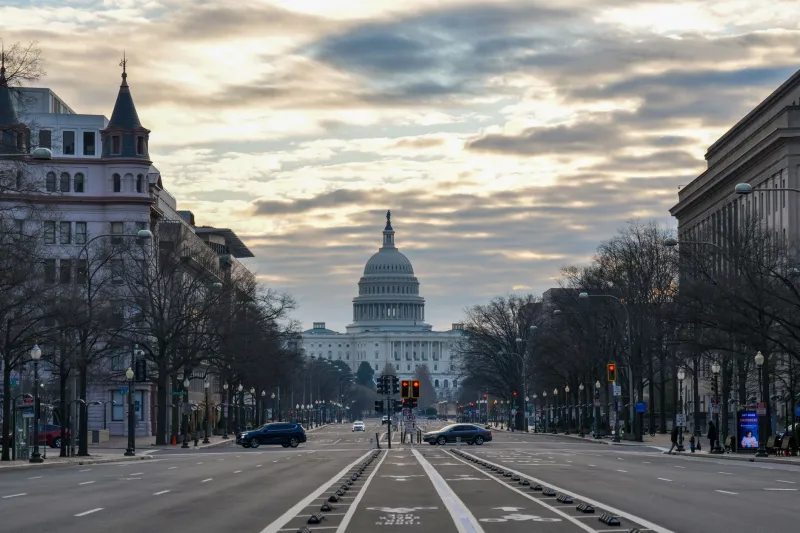
Late in December 2022, as most Americans were preparing for the holidays, Congress passed the Consolidated Appropriations Act — a 4,155-page omnibus spending package carrying a price tag of roughly $1.7 trillion. Lawmakers had fewer than 48 hours to review it. Most admitted they had not read it. Buried within its thousands of subsections were funding allocations, program extensions, and policy riders that had never appeared before a single committee for examination.
This was not an aberration. It was the system functioning exactly as a small number of powerful people intend it to.
The Architecture of Avoidance
The federal budget process, as civics textbooks describe it, is an orderly sequence: the president submits a budget proposal, congressional committees hold hearings, members debate and amend appropriations bills, and the final product reflects deliberate legislative judgment. In practice, that process has been almost entirely supplanted.
For more than two decades, Congress has repeatedly failed to pass individual appropriations bills on time. The result is a dependence on continuing resolutions — short-term spending patches that keep the government funded — and, increasingly, on massive omnibus packages assembled by a handful of senior lawmakers and White House budget officials in private negotiations. The broader membership of Congress, to say nothing of the public, is presented with the final product on a take-it-or-leave-it basis, with a government shutdown serving as the implicit threat behind every deadline.
Budget watchdog organizations have documented the consequences in granular detail. The Committee for a Responsible Federal Budget estimates that in at least six of the last ten fiscal years, more than $400 billion in discretionary spending was allocated through continuing resolutions or omnibus vehicles rather than through the regular appropriations order. In fiscal year 2023 alone, analysts identified over 7,200 earmarks embedded in year-end spending legislation — a figure that represents a more than 400 percent increase from the post-earmark-ban era of the early 2010s.
Who Writes the Language
The drafting of omnibus legislation is not, as it might appear, primarily the work of elected officials. Congressional staff — many of whom rotate between Capitol Hill positions and lobbying or consulting roles — play an outsized role in assembling the text. So do representatives from executive agencies, who submit "program justification" documents that frequently survive into final bill language with little alteration.
The private sector's fingerprints are equally visible to those who know where to look. Defense contractors, pharmaceutical companies, agricultural conglomerates, and financial institutions all employ teams of specialists whose explicit function is to identify procedural windows through which favorable provisions can be inserted. The omnibus process, with its compressed timelines and limited floor debate, is the most reliable such window available.
Consider the case of a $2.3 billion allocation for a next-generation military satellite communications program embedded in the fiscal year 2022 omnibus. The program had not appeared in the president's original budget request. It had not been the subject of a hearing before the Senate Armed Services Committee or its House counterpart. Its primary beneficiary, a defense technology firm with registered lobbyists maintaining active relationships with members of the Armed Services and Appropriations committees, had contributed a combined $1.8 million to relevant lawmakers' campaign committees in the preceding election cycle, according to Federal Election Commission records.
The firm's representatives, when contacted, declined to comment on the specific provision. The offices of the legislators identified as having championed the allocation did not respond to requests for comment.
The Earmark Revival and Its Discontents
For a brief period following the 2010 midterm elections, Congress formally banned earmarks — the practice of directing federal spending to specific projects or entities by name. The ban was never airtight, and it was formally relaxed in 2021 under the rebranded category of "community project funding." Proponents argued that transparency requirements attached to the new system — public disclosure of requests, certification of no personal financial benefit — would prevent the worst abuses of the earmark era.
The evidence suggests those guardrails are less robust than advertised. A 2023 analysis by the nonpartisan watchdog Open Secrets found that a significant portion of community project funding requests submitted by House members in the 117th and 118th Congresses went to organizations or localities with documented financial relationships to the requesting lawmakers' campaign donors. In several instances, the gap between a contribution and a corresponding funding request was measured in weeks.
More troubling, perhaps, is the category of spending that does not even qualify as an earmark in the technical sense — broad programmatic allocations that appear to benefit the general public but are structured in ways that effectively guarantee contracts to specific firms. Procurement specialists refer to these as "wired" contracts: specifications written so precisely around a single vendor's capabilities that competitive bidding becomes a formality.
The Agencies' Own Game
Executive agencies are not passive recipients in this arrangement. Career bureaucrats and political appointees alike have developed sophisticated strategies for using the omnibus process to expand their programmatic footprint beyond what the regular budget process would permit.
The practice, sometimes described inside the federal bureaucracy as "must-pass packaging," involves attaching agency funding priorities to legislation that Congress cannot afford to defeat — typically a continuing resolution passed hours before a government shutdown deadline. Because the entire package must be voted on as a unit, individual provisions receive no independent legislative consideration. An agency seeking to fund a controversial surveillance technology program, expand a regulatory office, or extend a contract with a preferred vendor can do so with no public hearing, no floor debate, and no recorded vote on the specific item.
Former Office of Management and Budget officials, speaking on background, confirmed that this dynamic is well understood within the executive branch. "Everyone knows the game," one former senior OMB analyst said. "The agencies that are good at it treat the omnibus as their second budget cycle. Some of them are better funded through that channel than through the regular process."
Accountability in Absentia
The structural problem, as budget reform advocates frame it, is not simply that bad actors exploit the system. It is that the system has been deliberately constructed to minimize accountability at every level. Lawmakers can support controversial spending without a recorded vote. Agencies can fund programs without formal authorization. Contractors can receive billions without competitive review. And the sheer volume of a multi-thousand-page bill ensures that even diligent journalists and watchdog groups will miss a significant portion of what has been inserted.
Efforts at reform have stalled repeatedly. The Bipartisan Congressional Budget Reform Act, introduced in various forms across multiple Congresses, has never advanced past committee. The HALT Act, which would have prohibited omnibus packages exceeding a specified page length without extended review periods, attracted fewer than a dozen co-sponsors in its last iteration.
In the absence of structural change, the pattern will continue. The next deadline will arrive. The next must-pass vehicle will be assembled behind closed doors. And somewhere in its thousands of pages, another half-billion dollars will find its way to a program that was never meant to survive the light.
Ahval Independent submitted records requests to the Office of Management and Budget, the House and Senate Appropriations Committees, and the Department of Defense regarding specific provisions referenced in this article. Responses are pending at the time of publication.