Deleted Before Discovery: The Federal Paper Trail That Keeps Disappearing
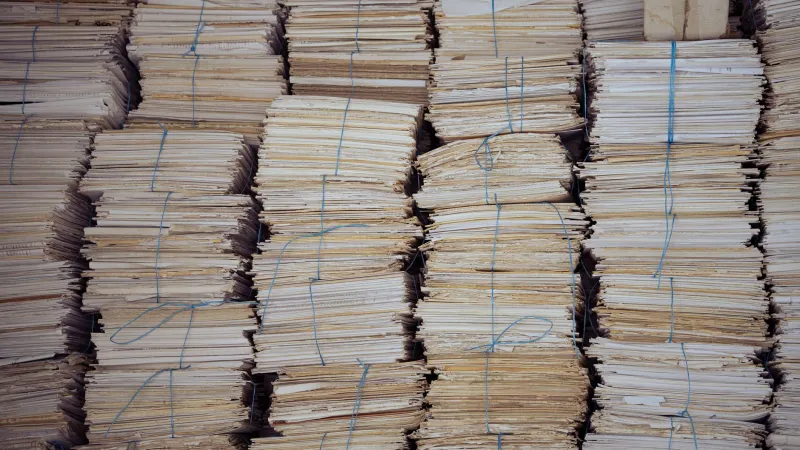
Somewhere inside a federal data center, a server migration is underway. Thousands of files are being transferred from one system to another. Some will make it across. Others — internal memos, draft policy documents, communications between senior officials — will not. Whether by design or bureaucratic indifference, the distinction rarely gets examined. And that, say records specialists and government transparency advocates, is precisely the problem.
Across multiple federal departments, a pattern has emerged that is difficult to explain away as mere administrative oversight. Documents that might illuminate past policy failures, expose internal disagreements, or contradict official narratives are vanishing — not through dramatic leaks or high-profile shredding scandals, but through the quieter machinery of records management: retention schedules, system upgrades, and the slow, unglamorous work of deciding what gets digitized and what gets left behind.
The Architecture of Forgetting
Federal agencies are legally required to manage their records under the Federal Records Act and the guidelines of the National Archives and Records Administration (NARA). In theory, these frameworks ensure that documents of historical or administrative value are preserved, transferred to the Archives, or — if they must be destroyed — done so only through an authorized, documented process.
In practice, the system has significant gaps. Agencies retain broad authority to classify documents as "transitory" — a category that covers records with minimal administrative value and no historical significance. Critics argue this classification is routinely applied too broadly, sweeping up materials that, in another era, might have formed the backbone of a congressional investigation or a Freedom of Information Act request.
"The transitory label is one of the most abused tools in the federal records system," said one former NARA official who spoke on condition of anonymity, citing professional obligations. "It's supposed to cover things like phone message slips and routine scheduling emails. But we've seen it applied to substantive communications that any reasonable archivist would flag for retention."
The problem is compounded by the sheer volume of electronic communications now generated by federal workers. Email alone has created an almost unmanageable records environment. When agencies migrate to new IT platforms — a process that happens with regularity across the federal government — records that were not properly tagged or indexed frequently fail to transfer. Some agencies have acknowledged these losses in inspector general reports. Fewer have faced meaningful consequences for them.
Selective Digitization and the Two-Tiered Archive
For records that predate the digital era, a different but equally troubling dynamic is at play. Digitization — the process of converting paper records into searchable electronic formats — has become a priority across the federal government, in part because physical storage is expensive and physical access is slow. But digitization is not neutral. It requires choices: which records get scanned, in what order, and with what level of metadata that makes them discoverable.
Investigators and historians who work with federal archives have noted a recurring pattern: records related to successful programs, landmark legislation, and favorable agency histories tend to be digitized and made accessible. Records related to program failures, internal disputes, cost overruns, or policy reversals are more likely to remain in physical storage — accessible only to those who know exactly what they are looking for and can travel to a federal records facility to find it.
"It's not a conspiracy," said one government archivist with decades of experience. "It's something more insidious than that. It's the cumulative effect of thousands of small decisions, each one defensible on its own, that together produce an archive that flatters the agency and buries the uncomfortable parts."
The Government Accountability Office has flagged similar concerns in multiple reports over the past decade, noting that agencies frequently fail to meet NARA's digitization benchmarks and that oversight of the process remains inconsistent.
When the Clock Runs Out
Perhaps the most consequential form of records suppression involves timing. The Freedom of Information Act gives agencies broad latitude to delay responses to public records requests — sometimes for years. In the interim, documents that might have been released are subject to retention reviews, system migrations, and the ordinary attrition of bureaucratic life. By the time a FOIA request is processed, the records it sought may no longer exist.
This dynamic has been documented in litigation. In several high-profile cases, federal courts have found that agencies failed to conduct adequate searches for responsive records — and in some instances, that documents had been destroyed after a request was filed, in potential violation of federal law. Sanctions in such cases are rare. Criminal referrals are rarer still.
The Department of Homeland Security, the Environmental Protection Agency, and the Department of Defense have each faced scrutiny over records management practices in recent years. Inspectors general at these agencies have issued findings ranging from inadequate training to systemic failures in electronic records retention. Follow-up action has been uneven at best.
"The enforcement mechanism is essentially broken," said a Washington-based attorney who specializes in government transparency litigation. "NARA can refer cases to the Department of Justice, but DOJ rarely prosecutes. Agencies know this. It changes the calculus."
The Historians' Warning
Beyond the immediate implications for accountability journalism and FOIA litigation, records scholars are raising a longer-horizon alarm. The federal archive is not just a tool for oversight — it is the primary raw material from which the historical record of American governance is constructed. When documents disappear, the history they might have informed disappears with them.
This is not an abstract concern. Historians studying the policy decisions of the 1980s and 1990s have already encountered significant gaps in the documentary record — gaps that correspond, with uncomfortable frequency, to periods of controversy or institutional embarrassment. As agencies move deeper into digital-only record-keeping, the potential for selective preservation grows rather than shrinks.
"Every generation of officials has an incentive to manage their own legacy," said one historian who studies the administrative state. "What's changed is that the tools available to do that are now far more powerful and far less visible than they used to be."
A System That Relies on Good Faith
The federal records system was designed with an assumption embedded in its architecture: that the agencies responsible for maintaining their own records would do so in good faith. That assumption has always been imperfect. What the current moment reveals is how thoroughly it can be exploited when the institutional culture around transparency erodes.
NARA remains chronically underfunded relative to the scale of its mandate. Congressional oversight of records management is sporadic and rarely generates sustained attention. And the agencies themselves face no structural incentive to preserve documents that might one day be used against them.
What is lost, in the end, is not just paper or data. It is the capacity for accountability — the ability of citizens, journalists, historians, and lawmakers to examine what their government actually did, rather than what it chose to remember. When the record disappears, so does the reckoning. And in a democracy, that cost is not abstract. It is borne by everyone.