Loyalists in Waiting: How Partisan Operatives Quietly Took Root Inside the Federal Civil Service
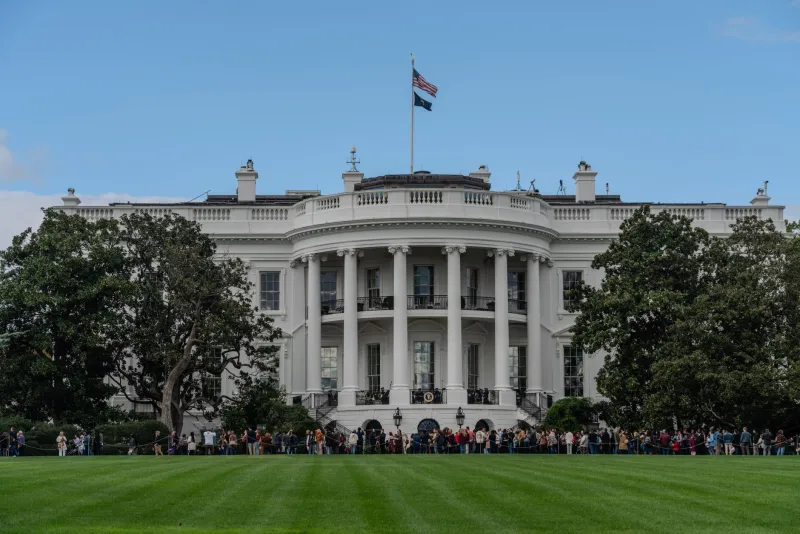
In Washington, power rarely disappears when an administration does. It migrates — downward, inward, deeper into the institutional architecture of the federal government. And for decades, a sophisticated network of political operatives has understood this better than most.
They call the process "burrowing in." Career officials, ethics lawyers, and government watchdogs call it something closer to a structural crisis.
At its core, the practice involves political appointees — figures hired explicitly to serve the agenda of a sitting president — converting their positions into career civil service roles before an administration changes hands. Once converted, they acquire the full protections of the merit system: they cannot be easily fired, reassigned without cause, or held accountable through the ordinary levers of electoral politics. They simply remain.
The Mechanics of Conversion
Federal law draws a clear distinction between political appointees and career civil servants. The former serve at the pleasure of the president; the latter are hired through competitive processes designed to insulate them from partisan pressure. The Office of Personnel Management (OPM) is the agency nominally responsible for policing the boundary between these two categories.
But that boundary, critics argue, has been steadily eroded.
OPM's own inspector general has flagged the problem repeatedly. In a series of reviews spanning multiple administrations — Democratic and Republican alike — auditors found that agencies frequently failed to adequately scrutinize conversion requests, that review timelines were compressed in the final months of outgoing administrations, and that documentation supporting competitive hiring was, in some cases, either incomplete or fabricated after the fact.
The numbers tell part of the story. In the final year of the George W. Bush administration, OPM flagged 19 conversion cases for additional review. During the Obama years, similar patterns emerged in different agencies. The Trump administration drew particular scrutiny — and legal challenges — for an executive order that would have created a new employment category, "Schedule F," effectively stripping job protections from tens of thousands of federal workers and enabling wholesale ideological realignment of the workforce. The Biden administration rescinded that order on its first day. The Trump administration reinstated it upon returning to office in 2025.
But Schedule F, for all the attention it attracted, is only one instrument in a much broader toolkit.
Networks That Outlast Elections
Beyond formal conversions, former officials and government ethics attorneys describe a subtler phenomenon: the cultivation of informal loyalty networks within agencies — clusters of mid-level career officials who share ideological commitments and quietly coordinate to advance or obstruct policy depending on the administration in power.
"It's not always about a single person burrowing in," said one former senior official at a major regulatory agency who requested anonymity to speak candidly. "It's about cohorts. People who came in together, who share a worldview, who know how to slow-walk a rulemaking or route information to sympathetic offices. The machinery is relational, not just procedural."
These networks are difficult to document precisely because they operate through legitimate institutional channels — interagency communications, informal working groups, discretionary decisions about staffing and scheduling that leave minimal paper trails. What makes them politically significant is their persistence. Unlike cabinet secretaries or political deputies who depart with each administration, these embedded figures remain, shaping the institutional culture of agencies over years and sometimes decades.
The consequences are not abstract. Regulatory priorities get quietly shelved. Enforcement actions are delayed or deprioritized. Career staffers with particular political sympathies find themselves promoted into supervisory roles with influence over hiring — and the cycle compounds.
Which Agencies Are Most Vulnerable?
Not all federal agencies are equally susceptible. Departments with large numbers of Schedule C positions — political appointees who serve in nominally nonpartisan advisory or staff roles — tend to see higher rates of attempted conversion. The Justice Department, the Department of Homeland Security, and the Environmental Protection Agency have each been identified in OPM reviews as sites of recurring concern.
The EPA presents a particularly instructive case. Environmental policy is among the most ideologically contested domains in American governance, and the agency has been a persistent target of political restructuring across administrations of both parties. Former EPA officials describe a workplace in which institutional memory itself has become politically freighted — in which which studies get cited, which regional offices receive resources, and which enforcement cases get prioritized can all reflect the residual influence of prior political leadership.
"The agency has a memory," one former regional administrator told Ahval Independent. "And that memory isn't neutral."
The Watchdog Gap
Oversight of this problem is structurally limited. OPM reviews conversion requests but does not have the investigative capacity to audit every agency's hiring decisions in real time. Inspectors general can flag irregularities, but their findings are advisory — they lack the authority to reverse personnel decisions unilaterally. Congressional oversight committees can hold hearings and issue subpoenas, but the granular, process-level nature of civil service manipulation rarely generates the kind of dramatic evidence that sustains public attention.
Civil service reform advocates argue that the system's vulnerabilities are not accidental. The competitive service was designed for an era when political patronage was the primary threat to bureaucratic integrity. It was not designed to contend with sophisticated actors who understand its procedural rules well enough to exploit them.
"The merit system assumes good faith," said one longtime government accountability researcher. "It assumes that people are trying to hire the most qualified candidates for genuinely nonpartisan reasons. Once you remove that assumption, the protections start to look very thin."
The Stakes for Democratic Governance
What is ultimately at stake in this dynamic is not merely administrative efficiency or bureaucratic tidiness. It is the question of whether democratic elections retain meaningful control over the direction of the executive branch — or whether that control has been partially outsourced to a permanent class of politically embedded operatives insulated from electoral consequence.
The civil service was created, in the aftermath of the spoils system's worst excesses, to ensure that government could function with some degree of continuity and professional integrity regardless of which party held the White House. The burrowing-in phenomenon — and the broader colonization of career positions by operatives with active partisan commitments — represents a corruption of that founding logic, regardless of which party benefits in any given cycle.
Both parties have engaged in versions of this behavior. Both have also complained bitterly when subjected to its effects. The symmetry is real, but it does not neutralize the institutional damage. Each administration that embeds its loyalists more deeply makes the next cycle of entrenchment easier to justify and harder to reverse.
The federal civil service, in theory, belongs to no party. In practice, it has become terrain — contested, mapped, and quietly occupied by those who understand that the most durable power in Washington is the kind that never has to run for anything.