Behind Closed Chambers: The Legal Machinery That Keeps State Legislative Scandals Buried
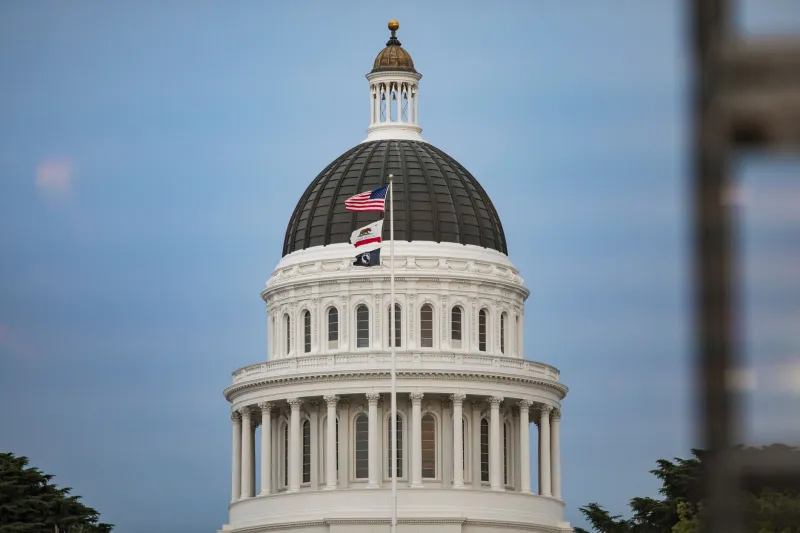
In 2019, a state legislative aide in a midwestern capital filed a formal complaint alleging sustained harassment by a senior lawmaker. The complaint was processed through the legislature's internal human resources office—an office that reported, structurally, to legislative leadership. Within three months, the aide had signed a confidentiality agreement, accepted a modest settlement, and departed her position. The lawmaker remained in office. The public learned nothing.
This account, drawn from documents reviewed by Ahval Independent and corroborated by a person with direct knowledge of the matter who declined to be named, represents a pattern that government transparency advocates describe as endemic across American state legislatures. The mechanisms vary in their specifics. The outcome is remarkably consistent.
The Federalism Gap in Transparency Law
American political journalism has long been oriented toward Washington. The structural logic is understandable—federal institutions are centralized, geographically accessible, and governed by a relatively robust framework of disclosure requirements. The Freedom of Information Act, financial disclosure statutes, and the Federal Advisory Committee Act, among other measures, create at least a nominal architecture of accountability around federal operations.
State legislatures inhabit a different legal universe. While all fifty states have some version of open records and open meetings law, these statutes are riddled with exemptions, and legislatures in many states have carved out substantial protections for their own internal operations. Personnel records, settlement agreements, internal investigative reports, and communications among legislative leadership are frequently classified as exempt from disclosure under the very transparency laws that the legislature itself enacted.
"The entity that writes the exemptions is the same entity that benefits from them," said one state government accountability researcher at a policy institute in the northeast. "That's not a coincidence. It's architecture."
The asymmetry is significant in practical terms. A federal agency that mishandles a misconduct complaint is subject to oversight from the Office of Special Counsel, the relevant inspector general, congressional committees, and the federal courts. A state legislature that does the same faces, in most jurisdictions, no equivalent external check. The internal process is the only process.
Confidentiality as a Structural Tool
The use of nondisclosure agreements in state legislative settlements has drawn periodic attention from legal scholars and advocacy organizations, but has rarely penetrated mainstream political coverage. Research by the National Conference of State Legislatures and various academic institutions suggests that a substantial number of states permit—and in some cases formally authorize—the use of public funds to settle misconduct claims against legislators under conditions of confidentiality.
The practical implications are considerable. Confidentiality agreements not only prevent the complaining party from speaking publicly; they frequently prohibit the legislature from acknowledging that a complaint was filed, that an investigation occurred, or that a settlement was reached. The public record, such as it is, contains only the absence of information.
In some states, the settlement funds themselves are obscured. Legislative budgets are often presented at a level of aggregation that makes it impossible for outside observers to identify individual payouts, even when those payouts involve allegations of serious misconduct by sitting members.
"You can't audit what you can't see," said one former state legislative staffer who spent a decade working in two different state capitals before transitioning to advocacy work. "And the people controlling the books have every incentive to make sure you can't see."
The Anatomy of a Buried Scandal
The mechanics of concealment are worth examining in some detail, because they operate at multiple levels simultaneously.
At the earliest stage, internal complaint processes are typically controlled by leadership offices with direct political stakes in the outcome. An allegation against a powerful committee chair, for example, will frequently be processed by staff who serve at the pleasure of that chair's allies. Investigators may lack independence, subpoena authority, or any obligation to produce a public report.
If the matter progresses to a settlement, legal counsel retained by the legislature—and paid from public funds—negotiates on behalf of the institution rather than the public interest. The resulting agreement is typically executed under a legislative privilege doctrine that courts have been reluctant to disturb, insulating it from subsequent disclosure requests.
If a journalist or advocacy organization attempts to obtain records through a public records request, they will encounter the exemptions described above, frequently supplemented by legislative claims of separation-of-powers immunity from executive-branch records requirements. Litigation is possible but expensive and slow, often taking years to resolve—well past the point of political relevance.
And if, despite these obstacles, information begins to surface publicly, leadership offices retain the capacity to characterize it as a personnel matter, invoke confidentiality obligations, and decline to comment—a posture that many local and regional news outlets, constrained by resources and access considerations, are reluctant to challenge aggressively.
Why National Media Looks Away
The comparative neglect of state legislative misconduct by national news organizations reflects a set of structural and economic realities that are worth naming directly.
State capital press corps have been decimated by two decades of local news contraction. The Pew Research Center has documented the collapse of local newspaper employment; the statehouse bureaus that once served as the primary check on state legislative conduct have been among the casualties. National outlets, for their part, tend to follow the gravitational pull of federal politics, where the audience is larger and the institutional infrastructure for coverage more developed.
The result is a coverage vacuum that the secrecy mechanisms described above are well-designed to exploit. A scandal that might generate sustained scrutiny in Washington can be contained, settled, and erased from the public record in a state capital with relatively modest institutional effort.
This matters because state legislatures exercise jurisdiction over an enormous range of issues that directly shape Americans' daily experience: education funding, Medicaid administration, criminal justice, housing regulation, environmental enforcement, and the redistricting processes that determine the composition of both state and federal representation. The officials who make these decisions are, in many cases, less accountable to the public than the municipal officials who manage their local water systems.
Pathways Toward Greater Accountability
Reforming this system would require action on several fronts simultaneously. A number of states have enacted or considered legislation establishing independent ethics commissions with genuine investigative authority over legislative conduct—entities structurally insulated from the leadership offices they are meant to police. Where such commissions exist with real independence and mandatory public reporting requirements, the evidence suggests they function as a meaningful deterrent.
Transparency advocates have also pushed for statutory restrictions on the use of public funds in confidential legislative settlements, requiring either public disclosure of the terms or judicial approval of the confidentiality arrangement. Several states have moved in this direction in the wake of the heightened scrutiny of workplace misconduct that characterized the latter half of the last decade, though implementation has been uneven.
At the federal level, some scholars have argued that Congress could condition certain categories of federal funding on state legislative compliance with baseline transparency standards—a mechanism with precedent in other areas of federalism. The political will for such an intervention has not yet materialized.
What is evident is that the current patchwork of exemptions, internal processes, and structural conflicts of interest constitutes a system that is working precisely as designed—not to surface the truth about legislative conduct, but to suppress it. The laws that govern millions of Americans are made by institutions that have constructed, piece by piece, a legal architecture specifically engineered to keep their own behavior in the dark.