Beyond the National Map: How Small-County Shifts Are Quietly Redrawing American Politics
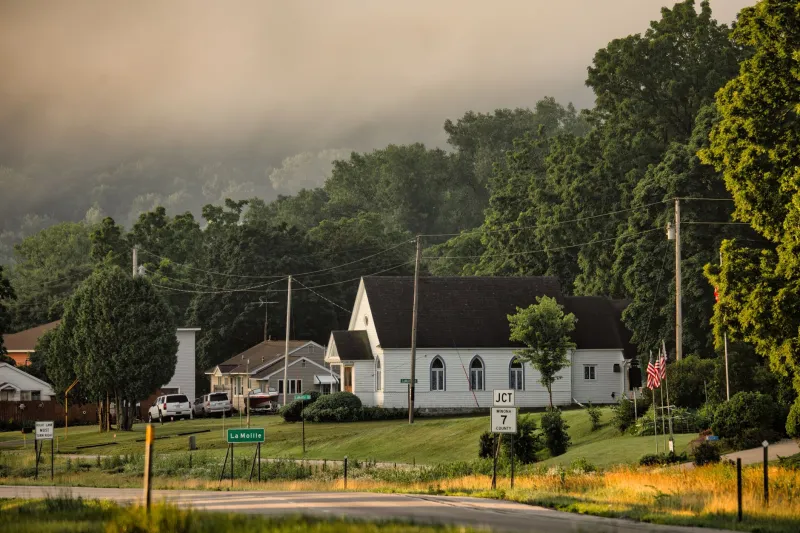
National election coverage tends to operate at altitude. Anchors discuss swing states in aggregate, pollsters report margins among demographic categories, and campaign strategists talk about "the rural vote" as though it were a monolithic and predictable bloc. What gets lost in that framing is the county-level granularity that actually determines electoral outcomes — and increasingly, that granularity tells a story that contradicts the dominant narrative on every side.
A data-driven review of county-level results across presidential, gubernatorial, and U.S. Senate elections from 2016 through 2024, supplemented by interviews with local officials, community organizers, and political scientists specializing in subnational voting patterns, reveals a rural political landscape in genuine flux. The shifts are not uniform, not ideologically tidy, and not well captured by the partisan frameworks that dominate national political media.
The Limits of the "Rural Republican" Assumption
The conventional wisdom holds that rural America moved decisively toward the Republican Party over the past two decades and has remained anchored there. At the national level, that narrative has sufficient supporting data to sustain itself. But aggregated state-level rural numbers obscure significant county-to-county variation that points toward something more unstable.
Consider Coos County in northern New Hampshire, a historically Democratic county rooted in paper mill employment and union culture that shifted Republican in 2016 and 2020 before showing measurable Democratic recovery in 2022 state legislative races — not because the electorate became more liberal, but because a specific ballot initiative addressing property tax relief for timber industry workers activated a constituency that had disengaged from partisan politics entirely.
Or examine Menominee County in Michigan's Upper Peninsula, where a Native American majority population has produced voting patterns that oscillate based on specific candidate positioning on tribal sovereignty and federal land management rather than national partisan alignment. In 2022, a Republican candidate for state legislature who had co-sponsored tribal consultation legislation outperformed the top of the ticket by 14 percentage points in the county.
These are not anomalies. They are data points in a pattern that emerges when analysis descends below the state level.
Economic Dislocation as the Primary Driver
Across the counties showing the most significant electoral volatility, a consistent underlying condition appears: economic dislocation that has outpaced the policy responses offered by either major party.
In rural Appalachian Ohio, counties that swung heavily Republican between 2012 and 2020 have begun showing signs of partisan softening — not because residents have embraced Democratic economic messaging, but because promised manufacturing and energy sector revivals have not materialized at the local level. Unemployment figures in Holmes and Coshocton counties remain above state averages, and local officials from both parties describe a constituency that is less ideologically committed than it is transactionally disappointed.
"People here didn't vote for a party. They voted for a result," said one Holmes County township trustee who has served under both Democratic and Republican county administrations. "When the result doesn't show up, they're not loyal to anybody."
This transactional orientation, widespread in economically stressed rural communities, creates volatility that national polling rarely captures because it does not fit neatly into the partisan identification models that most major surveys use as their analytical framework.
The Demographic Factor National Media Misreads
Rural demographic change is frequently discussed in the context of population decline — a narrative that, while accurate in aggregate, misses important within-county shifts. Several rural counties experiencing net population loss are simultaneously experiencing meaningful compositional change as younger, often college-educated residents depart and are replaced, in some areas, by remote workers relocating from metropolitan areas and, in others, by growing Latino agricultural worker communities that are beginning to naturalize and register at increasing rates.
In the San Luis Valley of southern Colorado — a region of high-altitude agricultural communities that has been predominantly Latino for generations — voter registration among naturalized citizens increased by 31 percent between 2018 and 2024, according to Colorado Secretary of State data. Alamosa County, historically competitive, has shifted measurably toward Democratic candidates in down-ballot races as this newly registered population has begun turning out in local and state elections. National coverage of Colorado's political geography rarely references the San Luis Valley at all.
Conversely, in rural counties of central Maine, an influx of remote workers from the Boston and Portland metro areas has introduced a new suburban sensibility into communities that had leaned Republican for decades. Oxford County produced its most competitive state legislative results in a generation in 2022 and 2024, a development that registered on no national electoral radar.
Grassroots Infrastructure Filling the Vacuum
Perhaps the most underreported dimension of rural political realignment is the role of non-traditional organizing infrastructure. In counties where both major parties have reduced their local presence — closing field offices, consolidating county committees, relying on digital outreach that reaches rural voters inconsistently — civic organizations, agricultural cooperatives, and local issue campaigns have filled the organizational vacuum.
In north-central Wisconsin, a farmer-led coalition organized around water quality regulation stemming from agricultural runoff has become a durable political force in several counties. The coalition does not affiliate with either party and has endorsed candidates from both, based solely on their positions on phosphorus regulation and manure management standards. In 2022, two of its endorsed candidates — one Democrat and one Republican — won state assembly seats in districts that had not been competitive in the previous decade.
"We're not trying to be a third party. We're trying to make the existing parties respond to something they've been ignoring," said one coalition organizer in Marathon County. "And it's working, slowly."
This kind of issue-specific, locally grounded organizing is precisely the type of political activity that national polling is poorly designed to measure and that political journalists based in Washington and New York rarely encounter firsthand.
Why This Matters Beyond the Counties Themselves
The significance of these county-level shifts extends well beyond the specific communities experiencing them. In a political environment where statewide margins in presidential swing states are routinely decided by fewer than 50,000 votes, the cumulative effect of dozens of counties moving even modestly in unexpected directions can determine which party controls the Senate, which presidential candidate receives a state's electoral votes, and which governor has the authority to certify election results or redraw district lines.
The national narrative that rural America is a settled, predictable Republican constituency does a disservice to the complexity of what is actually occurring — and, more consequentially, it may lead both parties to misallocate resources and misread the electorate in ways that produce genuine electoral surprises.
The map is changing. The change is documented in publicly available data. The communities driving it have been waiting, with considerable patience, to be taken seriously.