Recess-Ready: The Corporate Bill Factories Operating Between Congressional Sessions
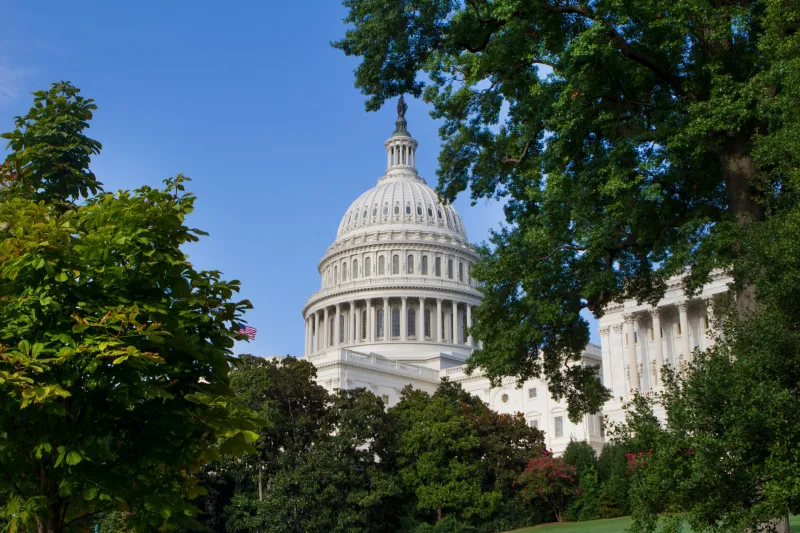
Every August, Washington empties. Members of Congress return to their districts for the summer recess, staff scatter, and the capital's political metabolism slows to what observers generously describe as a resting pace. For most Americans, recess is the period when their representatives are theoretically closest to the constituents they serve. For a particular class of Washington professional — the industry lobbyist, the trade association legislative director, the corporate policy counsel — recess is the most productive period of the year.
These are the months when legislation gets written. Not debated, not amended, not voted on — written. The drafting work that democratic theory assigns to elected representatives and their staff is, in a significant number of cases, performed by people whose clients have a direct financial interest in the outcome, working in offices that are not on the Capitol complex, accountable to no constituency except the ones that pay their retainers.
Ahval Independent reviewed legislative text, lobbying disclosure records, and congressional correspondence across multiple recent Congresses and spoke with former Hill staff, industry lobbyists, and policy researchers. The picture that emerges is of a legislative pipeline in which corporate interests are not merely influential at the margins but structurally embedded in the production of statutory language.
The Architecture of Pre-Written Legislation
The mechanics of industry-drafted legislation are less mysterious than they might appear. Trade associations — the industry groups that represent sectors ranging from financial services to pharmaceutical manufacturing to energy production — employ full-time legislative affairs staffs whose explicit function is to develop policy proposals and translate them into statutory language. These staffs include former congressional staff members, former agency officials, and practicing attorneys with expertise in the relevant regulatory domains.
During recesses, these teams work intensively on legislative packages that they intend to place with sympathetic members when Congress reconvenes. The placement process is itself a form of influence: an industry association approaches a member's office with a fully drafted bill, a supporting policy brief, a list of endorsing organizations, and, frequently, a commitment of campaign support. The member's staff reviews the draft — sometimes cursorily, given workload pressures — and the bill is introduced with the member's name attached.
"The honest version of what happens is that a member's office gets a bill that's eighty or ninety percent complete," said a former senior legislative aide who worked in the House for over a decade before moving to a trade association. "The staff might adjust some language, maybe add a provision or two to address a local constituency concern. But the architecture — the definitions, the enforcement mechanisms, the exemptions — that's already there when it arrives."
Following the Language
The evidentiary trail left by industry-drafted legislation is, paradoxically, most visible in the legislation's own text. When identical or near-identical statutory language appears in bills introduced by members from different states, different parties, and different committee assignments, the most parsimonious explanation is not independent parallel drafting — it is a common source.
Researchers at several nonpartisan policy institutes have documented this phenomenon systematically. Analysis of financial services legislation introduced over a recent five-year period found that specific definitional provisions — the kind of technical language that determines which entities fall within a regulatory regime and which do not — appeared verbatim in multiple bills introduced by members with no apparent coordination with one another. The language matched provisions in model legislation distributed by a major financial industry trade group.
Similar patterns have been identified in energy sector legislation, pharmaceutical pricing bills, and technology regulation proposals. In each case, the common thread is not a congressional committee working group or a bipartisan staff collaboration — it is an industry document that preceded the legislation by months or years.
The Recess Window
What makes the August recess particularly significant to this process is not simply the absence of legislative activity — it is the presence of a hard deadline. Congress returns in September facing a compressed calendar before the end of the fiscal year, then again before the end of the calendar year. Legislation that arrives in September with full documentation, stakeholder endorsements, and pre-packaged talking points has a structural advantage over legislation that is still being developed.
Several former lobbyists described what one called the "recess sprint" — an intensive period of drafting, coalition-building, and member outreach that begins the day Congress leaves and concludes with a finished legislative package ready for introduction on the first day back. The goal is not merely to have a bill ready but to have it so thoroughly prepared that the path of least resistance for a sympathetic member is adoption rather than modification.
"You want to make it easy," said one former trade association legislative director. "The easier you make it for a member's office to just pick it up and go, the more likely they are to do exactly that. Friction is the enemy. Your job during recess is to eliminate friction."
The Staffing Asymmetry
The structural condition that makes this system possible — and durable — is the profound staffing asymmetry between congressional offices and the industries seeking to influence them. The average congressional office employs a handful of legislative staff responsible for tracking and responding to policy across every domain that affects their constituents. A single mid-sized trade association may employ more legislative specialists focused exclusively on one regulatory area than an entire House committee.
This asymmetry is not accidental, and it is not new. But it has widened substantially as congressional staff budgets have stagnated while the lobbying industry has grown. The result is a legislative process in which the technical expertise required to draft complex statutory language increasingly resides outside Congress — in the very organizations with the most direct interest in how that language reads.
Reform advocates have proposed various remedies: expanded congressional staff capacity, stronger disclosure requirements for industry-drafted legislation, mandatory waiting periods between bill introduction and floor votes. None has achieved the critical mass required for passage. The industry that benefits from the current arrangement is, not incidentally, the same industry with the most direct access to the members who would need to vote for change.
For the constituents those members represent, the practical consequence is legislation that arrives bearing democratic credentials it did not earn — written by interests that answer to shareholders rather than voters, during recesses that were supposed to bring government closer to the people it serves.