The Men Who Never Appear on the Agenda: Inside America's Development Approval Machine
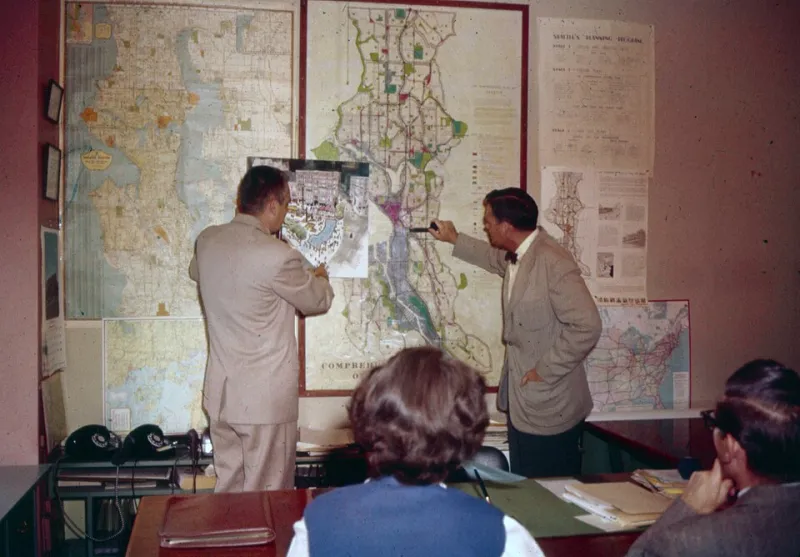
Photo: Seattle Municipal Archives from Seattle, WA, CC BY 2.0, via Wikimedia Commons
The sign outside city hall reads "Public Hearing Tonight: Proposed Mixed-Use Development." Residents arrive with three-minute speeches and concerns about traffic. What they do not see is the six months of maneuvering that already happened — the pre-application meetings, the whispered phone calls to planning staff, the carefully sequenced presentations designed to make approval feel inevitable.
At the center of that machinery sits a profession almost nobody outside real estate can name: the land-use consultant. Part strategist, part translator, part fixer, these practitioners move between developers and the local governments that regulate them. And in hundreds of American municipalities, they have become the de facto gatekeepers of what gets built.
The Repeat-Player Advantage
Planning scholars have long observed that zoning outcomes favor "repeat players" — applicants who appear before boards again and again, while ordinary residents show up once, angry and unprepared. What has changed is the professionalization of that advantage. A developer who hires the right expediting firm doesn't just get help filling out forms. It gets someone who knows which commissioner is recused this month, which staff memo triggered the last denial, and exactly how many parking variances the board has historically tolerated.
In fast-growing counties in Texas, Florida, and Arizona, a striking pattern emerges: the same handful of consultant names appear on application after application, across competing developers. One Phoenix-area firm, according to permit records reviewed for this report, handled applications representing more than a third of major residential approvals in a single year. The firm did not respond to requests for comment.
The relationships cut both ways. Some planning directors privately acknowledge that a trusted consultant's project file arrives "pre-cleaned" — engineered to clear staff review without friction. Projects from outsiders, especially small local builders without representation, face longer queues and more resubmittals. The result is a quiet sorting mechanism: those who know the system build; those who don't, hesitate.
Where the Public Meets the Process — Last
Open-meeting laws guarantee that decisions happen in public. They say nothing about the negotiations that precede them. Pre-application conferences, informal design workshops, and staff-level consultations are frequently exempt from disclosure, meaning the substantive shaping of a project — its density, its setbacks, its concessions — often occurs in rooms no resident ever enters.
"By the time it's on the agenda, the deal is done," says one former planning commissioner in the Southeast, who asked for anonymity to speak candidly about colleagues. "The hearing is theater. We're ratifying something that was settled over coffee three weeks ago."
Some states have begun pushing back. A handful of jurisdictions now require disclosure of paid advocates who lobby planning bodies, treating them like legislative lobbyists. Compliance, critics note, is thin — penalties are rare, and the definition of "lobbying" conveniently excludes much of what expediters do.
The Revolving Sidewalk
The consultant pipeline runs through government itself. Former planning directors routinely hang shingles as private advisors, selling not influence in the crude sense but fluency — an insider's grasp of unwritten thresholds and unwritten preferences. No ethics rule in most states bars the transition, and cooling-off periods, where they exist, are measured in months.
Defenders of the industry offer a fair counterpoint: the development process is genuinely byzantine, and consultants can accelerate housing in communities starved for it. A good expediter, one industry veteran argues, is "just a translator." But translation implies two parties who want to understand each other. When the translator's fees depend on approval — and when the same firm serves client after client before the same board — the arrangement looks less like translation and more like representation, with the public on the other side of the table without counsel of its own.
What Transparency Would Cost — and What It Costs Now
Meaningful reform would be unglamorous: lobbyist-style registration for land-use agents, published pre-application meeting logs, and conflict disclosures when consultants appear before agencies that formerly employed them. None of it is radical. All of it will be resisted, because the current opacity is the product.
The built environment of an American town — its housing supply, its tax base, its traffic patterns — is shaped less by the votes cast at public hearings than by the professionals who prepared those votes in advance. Residents are told the process is open. It is. The question is whether open, at the very end, counts for much when everything important happened earlier, somewhere else, among people whose names never make the agenda.